

In the increasingly competitive automotive industry, branding has become a crucial factor for success. A strong, distinctive brand identity can set a company apart from its competitors, forge emotional connections with consumers, and ultimately drive sales. Few automakers have understood this concept better than Kia Motors, the South Korean automobile manufacturer that has undergone one of the most remarkable rebranding efforts in recent automotive history. Let’s explore how Kia transformed itself from a budget-friendly, unremarkable car brand into a design-led, innovative powerhouse that competes with the best in the industry.
The Evolution of Kia: From Humble Beginnings to Global Competitor
Founded in 1944, Kia began as a manufacturer of bicycle parts and steel tubing. The company’s journey into automobile production started in the 1970s, but it wasn’t until the late 1990s and early 2000s that Kia began to make significant inroads into the global automotive market. For many years, Kia vehicles were primarily known for being affordable options for budget-conscious consumers, often sacrificing style and quality for price point.
During its early years in international markets, Kia struggled with:
• Poor perception of quality and reliability
• Uninspired design language
• Limited brand recognition
• Low customer loyalty
• Minimal emotional connection with consumers
These challenges positioned Kia firmly in the “economy” category of automakers, with vehicles purchased primarily for practical rather than aspirational reasons. But the company’s leadership recognized that to achieve long-term success and profitability, Kia needed to evolve beyond its budget-friendly image.
“Design is the core of our management strategy… We want to be a brand that people buy with their hearts, not just their heads.”
Peter Schreyer, Former Chief Design Officer at Kia Motors
The Strategic Pivot: Design-Led Transformation
Kia’s rebranding journey began in earnest in 2006 when the company hired Peter Schreyer, a renowned automotive designer who had previously worked for Audi and Volkswagen. This strategic hiring marked a fundamental shift in Kia’s approach to vehicle design and brand identity. Schreyer’s vision was to create a distinctive design language that would make Kia vehicles immediately recognizable and desirable.
The Tiger Nose Grille: Creating a Visual Signature
Perhaps the most significant design innovation that emerged from Schreyer’s leadership was the introduction of the “Tiger Nose” grille. This distinctive front fascia became Kia’s visual signature, giving the brand’s vehicles a coherent, recognizable face in a crowded marketplace. The Tiger Nose grille accomplished something crucial for brand identity: it made Kia cars instantly identifiable, even from a distance.
The impact of this design element cannot be overstated. Just as BMW has its kidney grilles and Mercedes-Benz has its star emblem, Kia now had a visual identity that conveyed strength, sophistication, and a hint of aggression—qualities previously not associated with the brand.
Beyond Aesthetics: Quality and Performance
While design was the spearhead of Kia’s transformation, the company recognized that beautiful cars with poor performance would not sustain a rebranding effort. Alongside its design revolution, Kia made significant investments in:
Engineering Excellence:
• Improved powertrains with better fuel efficiency
• Enhanced structural integrity and safety features
• Reduced NVH (Noise, Vibration, and Harshness)
• Advanced driver assistance systems
Manufacturing Quality:
• Modernized production facilities
• Improved quality control processes
• Reduced defects and recalls
• Extended warranty programs as a statement of confidence
User Experience:
• Intuitive infotainment systems
• Premium interior materials
• Thoughtful ergonomics
• Comfort-focused features previously found only in luxury vehicles
“The brand has evolved from a value-oriented automaker to a legitimate competitor in the mainstream market—and even ventures into luxury territory with vehicles like the Stinger and Telluride.”
Car and Driver Magazine, 2020
The New Logo: Symbolizing Kia’s Metamorphosis
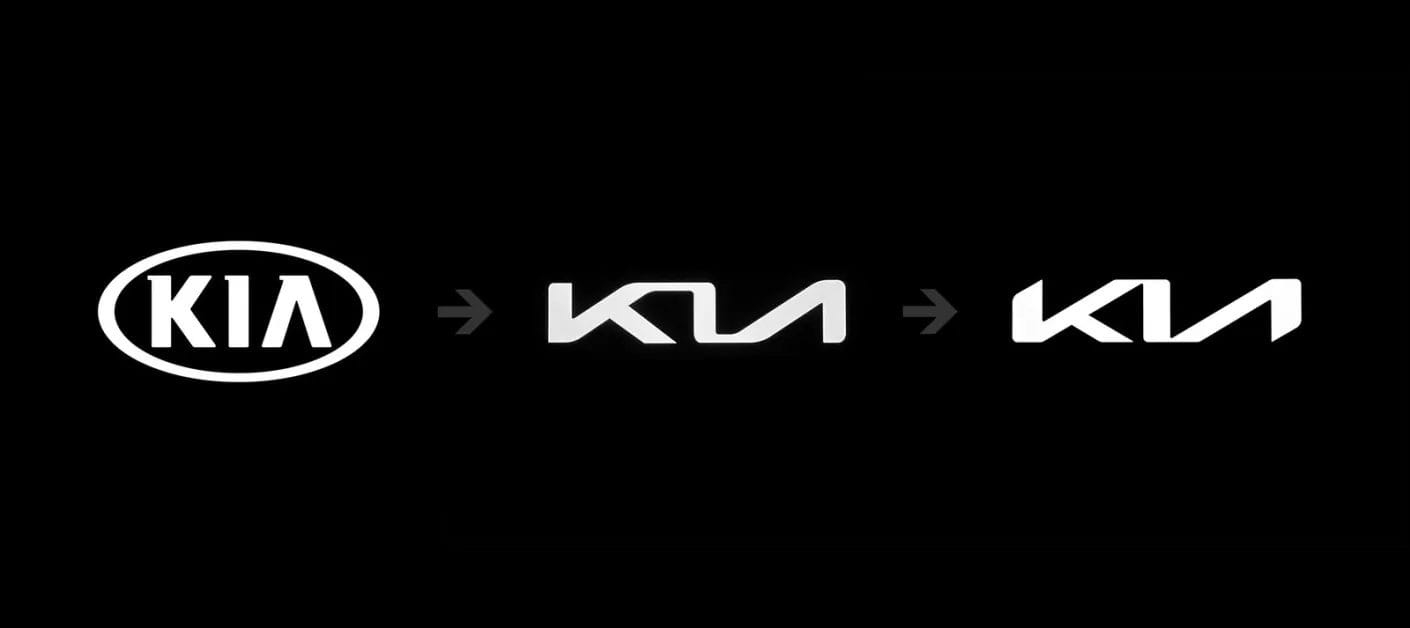
In January 2021, Kia unveiled its new corporate logo and global brand slogan, marking the most visible and comprehensive aspect of its rebranding effort. The new logo, with its connected, rhythmic, unbroken line, represents Kia’s commitment to creating inspiring moments for its customers. The symmetry of the design elements reflects balance and confidence, while the rising gestures embody Kia’s rising ambitions for the brand.
The logo redesign was accompanied by a new brand slogan: “Movement that inspires.” This replaced the previous “The Power to Surprise” tagline and signaled Kia’s intention to be seen as a source of inspiration rather than merely a purveyor of unexpected value.
The logo change was more than cosmetic—it represented a declaration of Kia’s transformation from a budget-friendly alternative to a design-led, innovative brand that inspires customers through its products and services.
Digital-First Unveiling: A Modern Approach
The unveiling of Kia’s new brand identity was itself a statement of the company’s forward-thinking approach. The launch featured a record-breaking pyrodrone show with 303 drones launching hundreds of fireworks in a synchronized display above Incheon, Korea. This spectacle set a Guinness World Record for “Most unmanned aerial vehicles (UAVs) launching fireworks simultaneously.”
By choosing such a dramatic and modern method to reveal its new identity, Kia demonstrated its understanding of contemporary brand communication and its ability to create memorable moments that resonate in the digital age.
“Kia’s new logo represents the company’s commitment to becoming an icon for change and innovation. The automotive industry is experiencing rapid transformation, and Kia is proactively shaping and adapting to these changes.”
Ho Sung Song, Kia’s President and CEO

The Results: Measuring Rebranding Success
The effectiveness of Kia’s rebranding effort can be measured through various metrics, all of which point to remarkable success:
Market Perception:
• Dramatic improvement in brand image surveys
• Increased consideration among premium vehicle shoppers
• Higher customer satisfaction scores
• Improved brand loyalty and retention rates
Sales Performance:
• Consistent growth in global market share
• Ability to command higher price points
• Reduced reliance on incentives and discounts
• Success in previously untapped market segments
Industry Recognition:
• Multiple design awards for vehicles like the Telluride, Stinger, and EV6
• Improved reliability ratings from independent organizations
• Positive critical reception in automotive media
• Recognition for innovation in electrification and mobility
Perhaps most telling is the fact that Kia vehicles are now purchased for their design, features, and driving experience—not merely because they represent good value. The emotional connection that consumers now feel with the Kia brand represents the ultimate success of its rebranding strategy.
Case Study: The Telluride Effect
No vehicle better exemplifies Kia’s successful transformation than the Telluride SUV. Launched in 2019, the Telluride quickly became a sensation in the midsize SUV market, often selling at or above MSRP—a rarity for non-luxury brands. The Telluride won the prestigious North American Utility Vehicle of the Year award and received glowing reviews from automotive journalists.
What makes the Telluride’s success so significant is that it competes in a premium segment where Kia would have struggled to be taken seriously just a decade earlier. The vehicle’s bold design, refined interior, and impressive feature set have attracted buyers who would previously have never considered a Kia. It represents the perfect embodiment of Kia’s rebranding journey—from budget option to aspirational choice.
Lessons from Kia’s Rebranding Success
Kia’s rebranding journey offers valuable lessons for any organization considering a similar transformation:
Commit Fully to Change:
• Kia’s transformation wasn’t superficial—it permeated every aspect of the business
• Leadership demonstrated unwavering commitment to the new direction
• Investments backed up the brand promise
Focus on Distinctive Design:
• Creating visual signatures helps build brand recognition
• Design can be a powerful differentiator in crowded markets
• Consistent design language builds cumulative brand equity
Align Product with Promise:
• Ensure the product experience delivers on the brand’s promise
• Address quality and performance alongside aesthetic improvements
• Create authentic reasons for consumers to believe in the brand
Be Patient:
• Kia’s transformation took place over more than a decade
• Brand perceptions change slowly and require consistent reinforcement
• Short-term sales shouldn’t overshadow long-term brand building
Kia’s rebranding success demonstrates that with vision, commitment, and patience, even the most entrenched brand perceptions can be transformed. By focusing on design excellence while simultaneously improving quality, performance, and the overall customer experience, Kia has created a blueprint for brand transformation that other companies would be wise to study.
As the automotive industry continues to evolve with electrification, autonomous driving, and new mobility models, Kia’s transformed brand is well-positioned to navigate these changes. The company that was once known simply for affordable transportation has become a design-led innovator ready to inspire movements well into the future.
From bicycle parts to record-breaking drone shows, from budget vehicles to award-winning designs, Kia’s journey represents one of the most comprehensive and successful rebranding efforts in recent business history. It stands as a testament to the power of vision, design, and unwavering commitment to transformation.
ABOUT TRIPSIXDESIGN
Tripsix Design is a creative agency based in Fort Collins, Colorado and Manchester, England. We specialize in branding, digital design, and product strategy – combining creativity with data-driven insight to deliver tailored, high-impact solutions. Small by design, agile by nature, we’re dedicated to producing thoughtful, high-quality work that drives results.
If you like what you’ve read here and would like to know more, or want to know how we can support your business growth, then connect with us here.
SOURCES
Kia Global Brand Story
Car and Driver: Kia Reveals New Logo and Slogan as Part of Plan to Become More of a ‘Mobility’ Brand