


A lot of websites lose leads before the sales conversation even starts. The problem is not always traffic. Often, it is confusion. If you are still treating the landing page vs homepage decision like a design preference, you are probably sending people to the wrong place and asking the page to do the wrong job.
This matters because a homepage and a landing page are built for different kinds of intent. One supports discovery. The other drives action. When those roles get blurred, conversion rates usually pay the price.
Landing page vs homepage: the core difference
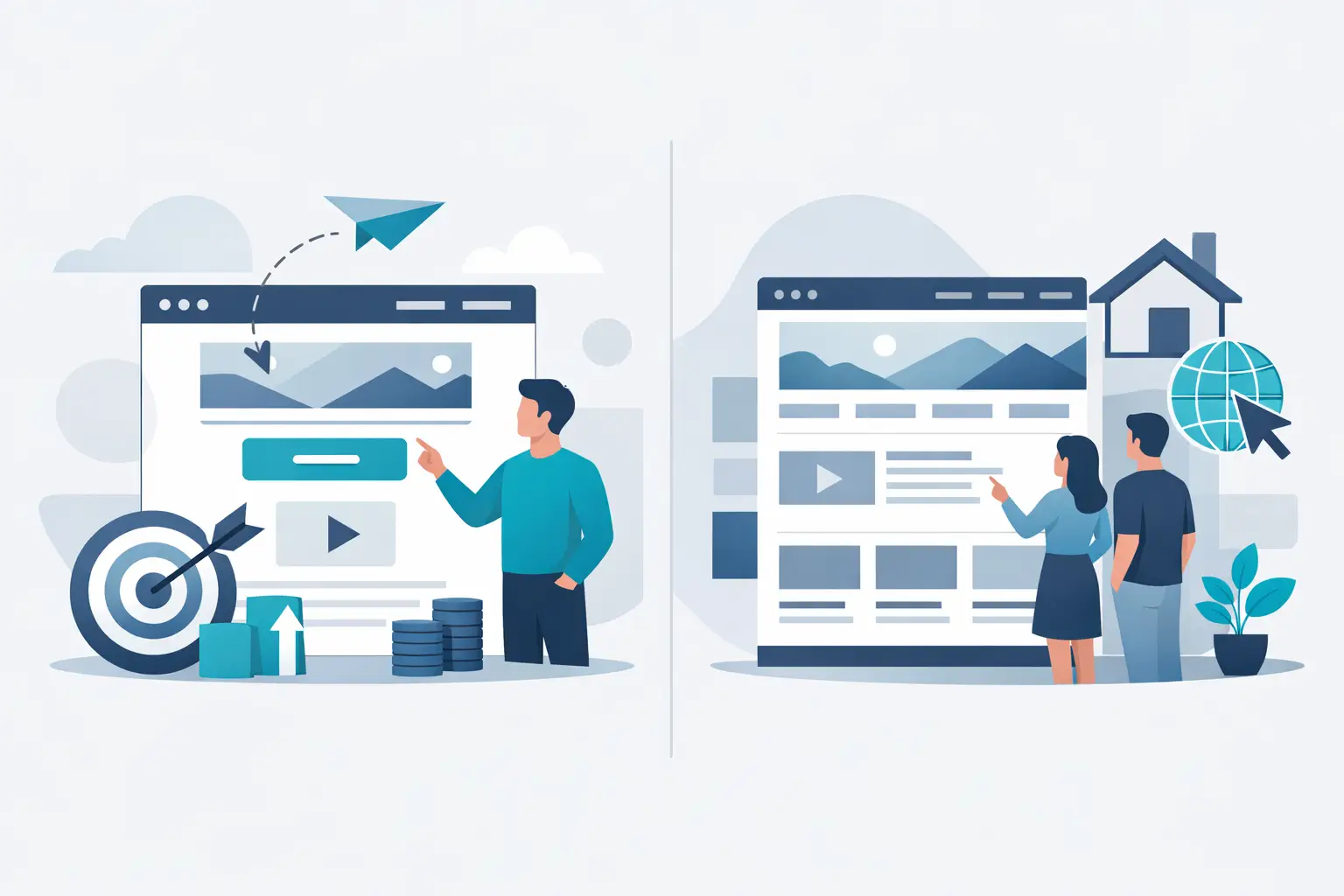
A homepage is your brand’s front door. It gives visitors a broad view of who you are, what you offer, and where they can go next. It is designed for people at different stages of awareness – someone hearing about your business for the first time, a returning prospect comparing services, or a job candidate checking credibility.
A landing page is more focused. It is built around one campaign, one audience, one message, and usually one call to action. Instead of saying, “here is everything we do,” it says, “this is the next step we want you to take.”
That difference sounds simple, but it changes everything about structure, copy, navigation, and measurement.
A homepage typically includes multiple pathways. Visitors can explore services, read about your company, browse work, and learn more before they convert. That is useful because many users are still evaluating whether you are a fit.
A landing page removes those extra routes. It narrows attention, reinforces one offer, and reduces decision fatigue. If someone clicks an ad about a specific service, offer, or campaign, they should land on a page that matches that promise with very little friction.
What a homepage is actually supposed to do
Too many businesses expect the homepage to carry the entire website. It cannot. A strong homepage is strategic, but its job is not to close every visitor on the spot.
The real role of a homepage is to orient people quickly. It should establish trust, communicate positioning, and direct users toward the most relevant next step. That could be viewing services, booking a consultation, reviewing case studies, or learning how your process works.
Because homepages serve broad traffic, they need range. They often include your brand story, key service categories, proof points, testimonials, and primary navigation. They are balancing clarity with optionality.
That range is valuable, but it comes with a trade-off. More options can help users self-select, yet more options also create more opportunities to hesitate, click away, or postpone action. That is why homepages are rarely the best destination for a high-intent campaign.
What a landing page is supposed to do
A landing page is built to convert a specific audience around a specific offer. It works best when the traffic source is defined and the message is tightly aligned. Paid search, paid social, retargeting, event promotion, product launches, and lead magnets are common examples.
The page should feel like a continuation of the ad, email, or campaign that brought the user there. If the promise was a free strategy session, the page should stay centered on that. If the message was about a particular service outcome, the content should go deeper on that outcome instead of shifting into general company information.
This is where many businesses miss the mark. They spend money generating targeted traffic, then send people to a homepage filled with competing messages, general navigation, and unrelated service categories. That weakens momentum right when the visitor is most ready to act.
A focused landing page usually performs better because it reduces noise. There is less to interpret and fewer ways to leave the path.
When to use a homepage and when to use a landing page
If someone types your brand name into Google, visits your site directly, or wants to understand your business at a high level, your homepage is the right starting point. It is your central brand environment.
If someone clicks on a campaign tied to one offer, audience, or pain point, use a landing page. The more targeted the traffic source, the more targeted the destination page should be.
For example, if a business owner is searching for help improving lead conversion on a professional services website, a dedicated landing page about conversion-focused web strategy will usually outperform a general homepage. The message is tighter, the proof is more relevant, and the call to action is easier to understand.
There are gray areas, of course. Some businesses have lean websites and can make a homepage work reasonably well for a few campaigns. Others have strong service pages that function almost like landing pages. The right answer depends on traffic quality, offer clarity, and how much segmentation your strategy requires.
Still, as a rule, broad traffic goes to broad pages and focused traffic goes to focused pages.
Landing page vs homepage in conversion strategy
The landing page vs homepage debate is really a strategy question disguised as a page-type question. It asks whether you want to support exploration or drive a single action.
A homepage is part brand platform, part navigation hub, part credibility builder. It supports the full website ecosystem. Metrics like engagement, pathing, and assisted conversions matter here.
A landing page is more like a conversion environment. It is measured more directly by form submissions, booked calls, demo requests, downloads, or purchases. Success is tied to a narrower outcome.
That is why landing pages often strip back main navigation, tighten the copy, and place stronger emphasis on the CTA. They are not trying to be comprehensive. They are trying to be persuasive.
This does not mean homepages should ignore conversion. They absolutely should guide users toward action. But they do so while serving more than one audience and more than one intent. That broader mission naturally limits how focused they can be.
The biggest mistakes businesses make
The most common mistake is sending every traffic source to the homepage. It feels easier operationally, but it usually creates a relevance gap. Campaign-specific intent gets diluted by general site messaging.
Another mistake is making the landing page too much like a homepage. Businesses add full navigation, multiple service blurbs, unrelated CTAs, and long sections that distract from the offer. The page starts trying to do everything and ends up doing very little.
There is also the opposite problem: making a homepage too narrow. If you overload it with one campaign message, you risk confusing visitors who came with different questions. Your homepage should guide, not trap.
A more subtle issue is inconsistency. If your ad promises one thing and your landing page headline says another, trust drops immediately. Strong performance depends on message match, visual continuity, and a clear path forward.
How to decide what your business needs
Start with traffic source. Where is the visitor coming from, and what were they expecting to see next? That expectation should shape the page.
Then look at intent. Are they researching your company, or are they responding to a specific offer? Research behavior usually belongs on the homepage or a strong internal page. Offer-driven behavior usually belongs on a landing page.
Next, consider your sales process. If your service requires more education and trust-building, the homepage may play a bigger role early on. If your campaign is designed to generate qualified leads from a defined audience, a dedicated landing page gives you much more control.
Finally, think about measurement. If you want cleaner performance data by campaign, landing pages make that easier. They isolate variables and help you see what message, audience, and CTA are working.
For growth-focused brands, this is rarely an either-or decision. You need both. Your homepage builds the brand and supports discovery. Your landing pages convert targeted demand. The highest-performing websites are not choosing one over the other. They are assigning each page a clear job and building around user intent.
That is where strategy changes the game. A page should not exist because a website needs one. It should exist because it has a clear role in moving the right visitor toward the right action. If your site feels busy but underperforms, that is the first thing worth fixing.
The next time you review a campaign, do not just ask whether the page looks good. Ask whether the destination matches the intent. That one decision can sharpen your message, improve conversion rates, and make the rest of your marketing work harder.
Frequently asked questions (FAQs)
What is the difference between a homepage and a landing page?
A homepage is your brand’s front door designed for visitors at different awareness stages, offering a broad view of who you are and multiple navigation paths. A landing page is highly focused on one campaign, audience, and message with a single call to action, designed to drive immediate action with minimal distractions.
When should I send traffic to my homepage versus a landing page?
Send traffic to your homepage when visitors arrive through brand searches, direct visits, or want a general understanding of your business. Use a landing page when traffic comes from targeted campaigns, paid ads, or specific offers where the message needs to match the visitor’s intent precisely.
Why do landing pages usually convert better than homepages for campaigns?
Landing pages convert better because they reduce decision fatigue by removing extra navigation routes, reinforcing a single offer, and maintaining message consistency between the ad and the page. This focused approach creates less friction and keeps visitors moving toward the specific action you want them to take.
What is the main purpose of a homepage?
A homepage’s primary role is to orient visitors quickly by establishing trust, communicating your positioning, and directing users toward the most relevant next step—whether that’s viewing services, booking a consultation, or learning about your process. It balances clarity with multiple options to serve visitors at different awareness stages.
What are the biggest mistakes businesses make with homepages and landing pages?
Common mistakes include sending all traffic to the homepage (creating a relevance gap), adding full navigation and multiple CTAs to landing pages (diluting focus), and creating message mismatches between ads and landing pages (eroding trust). Strong performance requires message consistency, clear page purpose, and appropriate traffic routing.
How do I decide whether my business needs a landing page or homepage for a campaign?
Evaluate your traffic source, visitor intent, sales process complexity, and measurement needs. If traffic is targeted and campaign-specific, use a landing page for cleaner performance data. If visitors are researching your company broadly, use your homepage or service pages. Most growth-focused brands benefit from having both working strategically together.