
A lot of businesses do not have a branding problem. They have a traction problem that looks like branding.
That distinction matters when you start evaluating manchester branding agency services. If your positioning is fuzzy, your website underperforms, your sales team tells a different story than your homepage, and your visuals feel disconnected from your market, a new logo will not fix it. What you need is a brand system that can carry strategy, design, and conversion at the same time.
For growth-focused companies, branding is not decoration. It is the structure behind how you are understood, remembered, and chosen.
What Manchester branding agency services should actually include
The phrase gets used broadly, and that is part of the problem. Some agencies use branding to mean visual identity only. Others include messaging, research, website design, campaign direction, and long-term optimization. Neither model is automatically wrong, but they produce very different outcomes.
The most valuable manchester branding agency services usually start before design. They begin with market context, business goals, and audience behavior. That means competitor analysis, customer persona development, and a clear look at how your business is currently positioned versus how it needs to be positioned to grow.
From there, strong branding work moves into verbal and visual systems. That includes naming logic if needed, messaging hierarchy, tone of voice, logo development, typography, color, image direction, and brand rules that can actually be used by internal teams. If those assets stop at a style guide, the work is incomplete.
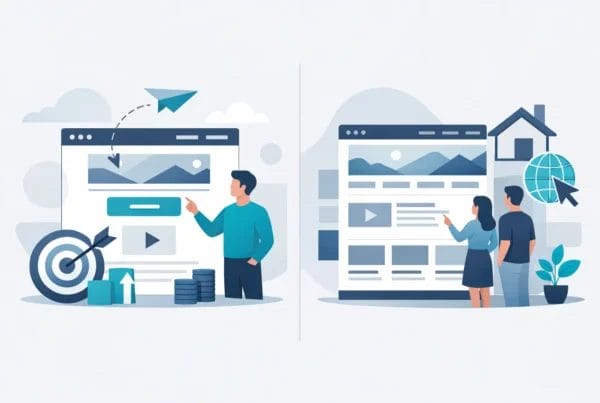
A modern agency should also be able to connect branding to digital performance. That means UX thinking, website strategy, conversion paths, SEO alignment, and content structure that reflects the brand clearly. The gap between brand strategy and technical execution is where many projects lose momentum.
Branding without implementation is where value gets lost
This is where decision-makers need to be careful. A polished brand presentation can look impressive in a boardroom and still fail in the market.
If an agency hands over a new identity but cannot translate it into a high-performing website, better landing pages, sales materials, product UX, or search visibility, the business is left with more internal work and more fragmentation. The handoff becomes the bottleneck.
That is why integrated agencies tend to create more usable momentum. When branding, web design, development, and marketing strategy are connected, there is less room for disconnect between what the brand says and how the digital experience performs.
For example, if your new positioning speaks to premium expertise but your website loads slowly, buries proof points, and makes it hard to request a meeting, the market experiences friction instead of confidence. The brand promise breaks down in real time.
How to judge whether an agency is strategic or just visual
The easiest test is to look at the questions they ask early.
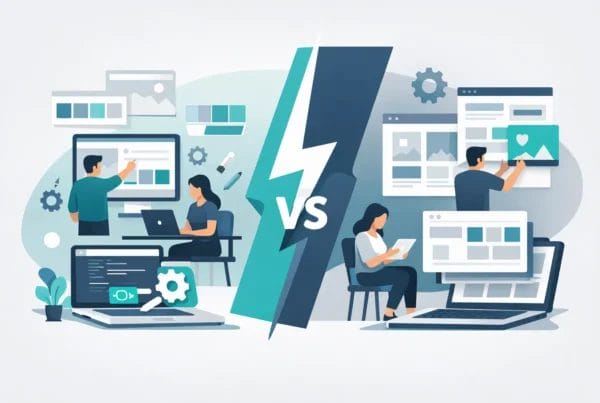
If the conversation stays centered on colors, logo preferences, and websites you like, you are probably looking at a design-led engagement. That can work for some businesses, especially if the strategic foundation is already established. But if your business is trying to enter a more competitive space, improve lead quality, or reposition for growth, that level of discovery is too shallow.
A strategic agency will ask about revenue goals, margin realities, customer segments, competitor pressure, sales objections, market perception, and where conversion breaks down today. They will want to understand not only how the brand should look, but what it must do.
That difference changes the output. Instead of a visual refresh, you get a clearer market position, stronger messaging, more intentional user journeys, and a brand system designed to support both awareness and action.
The best Manchester branding agency services connect brand and website performance
For many businesses, the website is where brand strategy gets tested. It is also where weak agency models get exposed.
A site can be beautifully designed and still underperform because the messaging is too vague, the page architecture ignores buyer intent, or the calls to action are disconnected from how prospects actually make decisions. On the other side, a technically sound site can still feel forgettable if the brand lacks distinction.
That is why the best work sits at the intersection of identity, content, UX, and development. You want an agency that understands how messaging influences navigation, how search strategy shapes page structure, how speed affects conversion, and how design choices influence trust.
This is especially relevant for companies with complex services, multiple audiences, or long sales cycles. In those cases, branding needs to do more than create recognition. It needs to simplify decision-making.
An agency like TripSix Design approaches that challenge as a connected system rather than a sequence of siloed tasks. That matters when the goal is not just to look stronger, but to compete more effectively.
What different businesses need from branding depends on stage
Not every company needs the same level of engagement, and forcing the wrong scope creates waste.
A startup often needs foundational clarity first. That might mean audience definition, positioning, naming support, early messaging, and a lean but credible visual identity that can scale. Speed matters here, but so does discipline. Early brand decisions tend to shape product perception and sales momentum faster than founders expect.
An established business usually has a different problem. The brand may be outdated, inconsistent across channels, or too generic for the market it wants to win now. In that case, the work is less about invention and more about sharpening what already exists, fixing friction in the customer journey, and aligning teams around a stronger story.
For companies in active growth mode, branding often becomes an operational issue as much as a creative one. They need systems their marketing team can use, website architecture that supports campaigns, and messaging that holds up across presentations, product pages, search content, and sales conversations.
This is where a full-service approach earns its value. Not because every business needs every service, but because the right combination can be tailored without losing consistency.
What to expect from a serious agency relationship
A serious branding engagement should create clarity, not confusion. You should leave the process with sharper decisions, not just more files.
That means the agency can explain why your position is changing, how the visual direction supports that shift, where the website should improve, and what success will look like after launch. If they cannot articulate the business case behind the creative, the work is likely too subjective.
It also means they should be realistic. Not every business needs a full rebrand. Sometimes the smarter move is refining messaging, restructuring the website, improving UX, and tightening the visual system rather than starting from zero. Good agencies are willing to say that.
There are trade-offs too. A highly strategic process takes more input and alignment from your team. It may surface internal disagreements about audience, offers, or growth priorities. That is not a sign the process is failing. It usually means the work is finally getting to the real issues.
Red flags when comparing agency options
If an agency promises a brand without discussing business performance, be cautious. If they separate branding entirely from website execution, be cautious. If they talk about trends more than differentiation, be cautious.
Another red flag is overproduction without usable application. Many businesses do not need a hundred-page brand deck. They need a system their team can apply across web, sales, pitch materials, and campaigns without losing consistency.
You should also pay attention to whether the agency can work across disciplines. Branding decisions affect SEO, page hierarchy, development choices, and conversion paths. If those functions are disconnected, you will likely pay for that disconnect later in revisions, delays, or underperformance.
Why this decision has more commercial impact than most teams expect
Branding tends to get treated as a marketing line item. In practice, it affects pricing power, conversion efficiency, sales confidence, recruiting, and how quickly people understand why your business matters.
That is why choosing between different manchester branding agency services is not really about picking a style. It is about choosing the level of strategic support your business needs to compete.
The strongest agencies do not just make brands look current. They build systems that help businesses move faster, communicate more clearly, and convert more of the right opportunities.
If your brand is not helping prospects understand your value quickly, trust you sooner, and take the next step with confidence, the issue is bigger than design. It is a growth constraint hiding in plain sight.
The right agency partnership should remove that friction and replace it with momentum.