
Fort Collins buyers can spot a dated website fast. If your site looks polished but fails to explain what you do, guide users to action, or show up in search, it is not doing its job. That is why professional website design Fort Collins businesses invest in has to go beyond aesthetics and work as a growth tool.
A high-performing website should help your brand look credible, communicate clearly, and convert interest into action. For some companies, that means more quote requests. For others, it means stronger lead quality, better recruiting, or a cleaner sales process. The point is not to chase design trends. The point is to build a site that supports business momentum.
What professional website design in Fort Collins should actually deliver
A lot of websites are built as digital brochures. They tell, but they do not persuade. They exist, but they do not perform. That gap usually comes from treating design as a visual exercise instead of a strategic one.
Professional website design in Fort Collins should start with business goals. A local service company may need stronger location-based visibility and easier lead capture. A manufacturer may need clearer messaging, stronger credibility signals, and a better user path for buyers who are doing serious research before they ever contact sales. A startup may need a site that positions the brand as more established than its age would suggest. Different businesses need different outcomes, and the site architecture should reflect that.
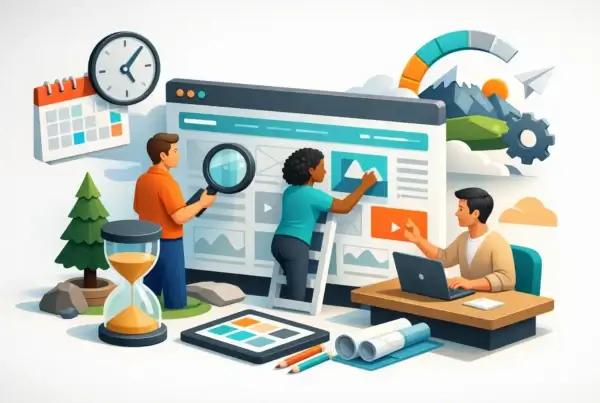
The strongest websites balance four things at once: brand clarity, user experience, technical performance, and conversion strategy. If one of those is missing, the whole system gets weaker. A beautiful site with poor messaging underperforms. A fast site with weak UX leaks leads. A clear site with no search visibility struggles to get seen.
Why visual design alone is not enough
Strong design matters. It shapes first impressions and gives your business authority. But design without strategy often creates expensive confusion.
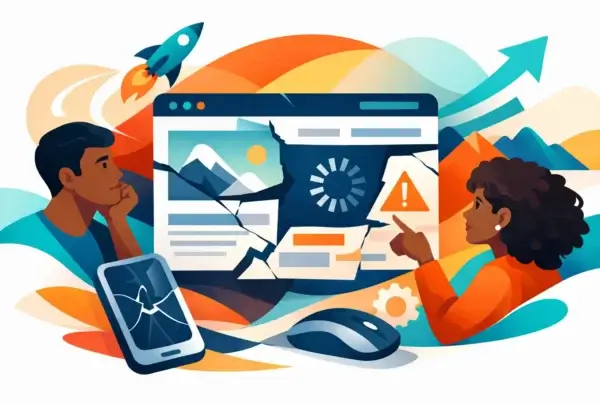
Many businesses come into a redesign thinking the main issue is that their website looks old. Sometimes that is true, but the visual layer is often just the symptom. Underneath it, there may be unclear positioning, generic copy, weak calls to action, poor mobile behavior, or a structure that makes users work too hard to find answers.
That is where a more complete approach wins. Branding, UX, SEO, content hierarchy, and development should inform each other from the beginning. When those pieces are handled in isolation, websites tend to feel fragmented. When they are aligned, the result feels sharper, faster, and more convincing.
This matters even more in a competitive market. Fort Collins has no shortage of ambitious businesses, and your website is often the first serious filter prospects use when deciding whether to trust you. If your digital presence feels inconsistent with the quality of your actual work, the website becomes a liability.
Professional website design Fort Collins companies can grow with
Growth changes what a website needs to do. A smaller company may only need to establish trust and capture leads today, but if the business is adding services, expanding markets, or investing more heavily in digital marketing, the website should not become a bottleneck six months later.
That means building for scalability from the start. Page structures should support future expansion. Messaging should be flexible enough to evolve with the business. Development choices should make it easier to add new functionality, improve landing pages, and refine the conversion journey over time.
It also means resisting the urge to overbuild. Not every business needs a complex feature stack on day one. Sometimes the smartest move is to launch with a focused site that does a few things exceptionally well, then improve it based on real user behavior and performance data. Strategy is partly about knowing what to include, and partly about knowing what to leave out.
The role of UX in lead conversion
Good user experience is often invisible. Visitors do not usually say, this site has excellent UX. They just stay longer, understand more quickly, and take action with less friction.
That starts with structure. Navigation should make sense without forcing users to think too hard. Service pages should answer the questions buyers actually have, not just describe deliverables. Calls to action should appear naturally at points where intent is strongest. Mobile experiences should be designed intentionally, not treated as scaled-down desktop versions.
Small choices make a measurable difference. Shorter forms can increase submissions, but only if lead quality holds up. Cleaner layouts can improve readability, but only if they still provide enough substance to build confidence. There is always a balance between simplicity and persuasion.
For businesses with longer sales cycles, UX has another job. It needs to support research. That means creating pathways for users who are not ready to convert on the homepage but still want proof, clarity, and reasons to keep moving. Case study framing, service detail, and trust signals all matter here.
SEO and website design are not separate conversations
A common mistake is treating SEO like something that happens after the site launches. In reality, search visibility is shaped early by site structure, page intent, content planning, internal hierarchy, speed, and technical build quality.
If you want local and regional visibility, your site should be organized around the way your audience searches. That does not mean stuffing pages with keywords. It means building clear service pages, useful location relevance where it adds value, and content that reflects actual buyer questions.
For Fort Collins businesses, local context can strengthen relevance, but only when it is meaningful. A website does not need to repeat the city name on every page to rank or convert. It needs to present a credible business, clear offerings, and a technically sound experience that search engines and users can both navigate easily.
Page speed matters here too. Slow websites frustrate users and quietly hurt performance. Strong development practices, thoughtful media handling, and cleaner code can improve both experience and visibility. This is one reason design and development should work together instead of being handed off like separate departments with separate priorities.
What to look for in a web design partner
If you are evaluating agencies for professional website design Fort Collins projects, the real question is not who can make the nicest homepage mockup. It is who can connect your brand, your customer journey, and your growth goals into a site that performs.
Look for a partner that asks hard questions early. What is the business trying to achieve? Where are leads currently falling off? What makes the company different in the market? Which pages need to rank? What actions matter most after launch? A strong process should bring these answers into the build, not leave them for later.
It also helps to work with a team that understands the full picture. Brand positioning affects messaging. Messaging affects UX. UX affects conversion. Development affects speed and flexibility. Analytics affects what gets improved next. When one partner can think across that whole system, the result is usually more cohesive and more commercially effective.
That is one reason agencies like Tripsix Design focus on the intersection of brand strategy, technical execution, and performance. The website is not the finish line. It is the platform your marketing, sales, and reputation will keep building on.
Red flags that your current site is holding you back
Some problems are obvious. The site looks outdated, loads slowly, or breaks on mobile. Others are more subtle.
If traffic is steady but leads are weak, the issue may be messaging or conversion flow. If leads come in but are a poor fit, the site may not be qualifying users clearly enough. If your team struggles to explain what makes your business different, the website may be reflecting that same lack of positioning. If every marketing effort feels harder than it should, your site may not be giving those efforts a strong enough foundation.
A redesign is not always the answer in the same form. Sometimes the right move is a full rebuild. Sometimes it is a strategic repositioning paired with a UX overhaul. Sometimes content strategy is the missing piece. What matters is diagnosing the real constraint instead of assuming every website problem is a visual one.
The businesses that get the most value from web design are usually the ones that treat it as an investment in clarity and conversion, not just appearance. A strong website should help your company look sharper, sell better, and create less friction between interest and action. If your current site is not doing that, the next step is not more decoration. It is better strategy.
Frequently asked questions (FAQs)
What makes a professional website design different from just a nice-looking website?
Professional website design goes beyond aesthetics to function as a growth tool for your business. It balances brand clarity, user experience, technical performance, and conversion strategy—working together to build credibility, communicate clearly, and turn interest into measurable action like leads, sales, or recruits.
Everything covered above is what we build into every website design project we take on, from first wireframe to launch.
Why is user experience (UX) important for converting website visitors into leads?
Good UX makes it easy for visitors to understand your offering and take action without friction. This includes intuitive navigation, strategically placed calls to action, mobile-friendly design, and content that answers buyer questions. Small improvements—like shorter forms or cleaner layouts—can measurably increase conversions while maintaining lead quality.
Should SEO be considered during website design, or is it something to add later?
SEO should be built in from the start, not added afterward. Search visibility is shaped early by site structure, page intent, content planning, and technical build quality. Organizing your site around how your audience searches, ensuring fast page speeds, and maintaining clean code all contribute to better rankings and user experience simultaneously.
How should a website adapt as my Fort Collins business grows?
Build for scalability from the beginning by designing page structures that support future expansion, using flexible messaging that can evolve, and choosing development practices that make it easy to add new functionality and landing pages. Start focused on what works best, then refine based on real performance data as your business needs change.
What should I look for when choosing a web design agency?
Choose a partner that asks hard questions about your business goals, customer journey, and market differentiation upfront—rather than jumping straight to design. Look for agencies that understand the full picture: how brand positioning, messaging, UX, development, and analytics all work together to create a cohesive, commercially effective website.
What are signs that my current website is holding my business back?
Red flags include an outdated appearance, slow loading times, poor mobile experience, steady traffic but weak leads, or leads that don’t fit your ideal customer. More subtle issues include unclear messaging, weak calls to action, or a user path that doesn’t support research for longer sales cycles.