

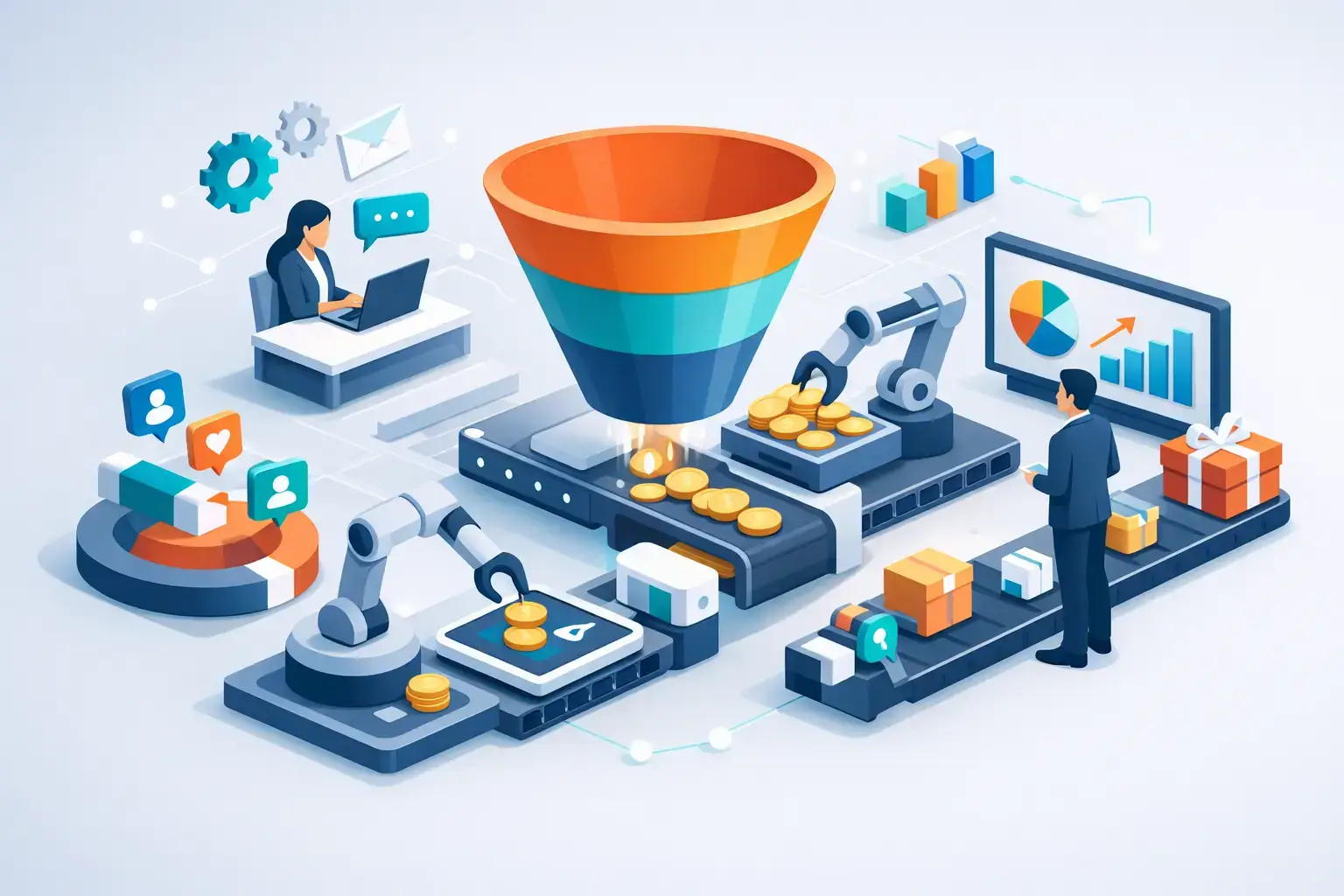
Most funnels do not fail because the offer is weak. They fail because timing is off, follow-up is inconsistent, or the handoff between marketing and sales is messy. That is why sales funnel automation examples matter so much. The right automation does not replace strategy. It makes sure your strategy shows up at the right moment, for the right lead, with less friction.
For growth-focused businesses, automation works best when it supports the buyer journey instead of forcing it. A founder researching options needs something different from a lead who already booked a demo. If both people get the same message, conversion rates usually stall. Good automation fixes that by matching communication, scoring, and next steps to real buyer intent.
What good sales funnel automation examples actually have in common
The strongest systems are not built around volume. They are built around relevance. A useful automated funnel reacts to behavior, keeps data organized, and gives your team clearer signals about who is ready to move.
That sounds straightforward, but there is a trade-off. The more advanced the automation, the more important the inputs become. Weak messaging, muddy positioning, or a confusing website will not be saved by software. Automation scales what already exists. If the experience is strong, it amplifies performance. If the experience is fragmented, it just delivers that fragmentation faster.
1. Lead magnet download with qualification built in
A common starting point is a lead magnet funnel, but the smarter version does more than send a PDF. When someone downloads a guide, checklist, or industry report, the form can capture qualifying details like company size, role, or primary challenge. That data can then route the lead into a more tailored sequence.
For example, a startup founder who selects brand positioning as their biggest challenge should not get the same follow-up as an operations lead focused on conversion optimization. Automation can segment both instantly, assign lead scores, and surface the higher-intent contact to sales or strategy teams.
This works especially well for B2B service businesses because it reduces generic follow-up. The risk is asking for too much too early. If your form feels like a job application, conversions drop. The balance matters.
2. Contact form automation that does more than send a notification
A lot of businesses treat contact forms like digital voicemail. A message comes in, someone gets notified, and then the response depends on who is available. That creates delay, and delay costs deals.
A better setup triggers an instant confirmation, tags the inquiry based on service interest, pushes the lead into your CRM, and alerts the right internal team. If someone asks about web design, they should not sit in the same queue as a product development inquiry. Automation can categorize and prioritize that traffic in seconds.
This is one of the most practical sales funnel automation examples because it improves speed without changing your core offer. It also creates a cleaner client experience. People know their request was received, and your team knows what to do next.
3. Demo or consultation booking with pre-meeting nurturing
When a prospect books a call, the funnel should not go quiet until the calendar event starts. That dead space is where no-shows happen, interest cools off, and context gets lost.
Automation can send confirmation details, a short brand-building message, a relevant case study, and a reminder sequence before the meeting. It can also collect pre-call information through intake questions so the conversation starts with context instead of basic discovery.
This kind of workflow is valuable for agencies, consultants, and service businesses with longer consideration cycles. It protects pipeline quality. At the same time, too many reminders or too much content can feel heavy-handed. The goal is to build confidence, not crowd the lead.
4. Abandoned quote or proposal follow-up
Not every funnel ends at checkout. In many service businesses, the real drop-off happens after a quote, scope, or proposal is delivered. Prospects get busy, stakeholders weigh options, and what looked promising goes quiet.
Automation helps here by triggering a timed follow-up sequence after a proposal is viewed or sent. One message might answer common objections. Another might clarify timelines or implementation steps. A later touchpoint can offer a simple prompt to restart the conversation.
What makes this effective is specificity. Generic check-ins rarely convert. A follow-up tied to the actual stage of the buying process feels more useful and more confident. If your proposals already have strong positioning and clear next steps, automation can recover opportunities that would otherwise disappear into the pipeline.
5. Lead scoring based on real buying signals
Not every lead deserves the same level of attention. One person might open every message but never visit pricing or service pages. Another might return to your site three times in a week, review case studies, and submit a second inquiry. Those signals are not equal.
Lead scoring automation assigns weight to behaviors that indicate intent. Page visits, form fills, repeat sessions, booked calls, and proposal views can all contribute to a score. Once a threshold is met, the system can notify sales, trigger a different nurture path, or flag the lead as sales-ready.
This matters because it prevents teams from wasting energy on low-intent contacts while ignoring stronger opportunities. But scoring models need refinement. If you assign points poorly, your team ends up chasing activity instead of intent.
6. Re-engagement for stalled leads
Some leads are not a no. They are just not ready yet. That makes re-engagement one of the most underrated sales funnel automation examples.
A stalled lead can enter an automation after a set period of inactivity. Instead of sending the same repeated pitch, the sequence can shift angle. It might address a different pain point, share a fresh proof point, or invite the lead to revisit the conversation when timing improves.
This approach works because buyer hesitation is often situational. Budget cycles change. Internal priorities shift. New pain points emerge. A well-timed reactivation message can bring qualified leads back into motion without requiring your team to manually monitor every dormant record.
7. Upsell and cross-sell automation after conversion
Funnels should not stop at the first sale. Once someone becomes a client, automation can support expansion by introducing the next logical service, product, or engagement.
If a client completes a website redesign project, for example, their next need may be conversion optimization, SEO strategy, or inbound lead generation support. An automated post-conversion path can educate them on what comes next based on where they are in the growth cycle.
This kind of funnel works best when the offer progression is natural. Forced upsells damage trust. Strategic cross-sell automation, on the other hand, helps clients see the bigger opportunity and keeps your pipeline healthier over time.
8. Internal handoff automation between marketing, sales, and delivery
Some of the most valuable funnel automation is invisible to the prospect. Internal workflows can create tasks, assign owners, update deal stages, and move information from one team to another without manual chasing.
That matters more than many businesses realize. A polished front-end funnel can still break once a lead moves from inquiry to proposal or from sale to onboarding. Automation reduces the gaps. It keeps context attached to the client record and helps teams act faster with fewer dropped details.
For businesses trying to scale, this is often where efficiency becomes real. Better handoffs mean faster response times, cleaner project starts, and less revenue leakage.
9. Behavior-based website personalization
This is the most advanced example on the list, but it can be powerful when done well. If a returning visitor consistently views a specific service category, automation can adjust calls to action, recommended content, or messaging blocks based on that interest.
Someone exploring brand strategy should not always see the same homepage emphasis as someone focused on development or performance marketing. Personalized pathways reduce friction and make the funnel feel more relevant.
The caution here is complexity. Personalization requires solid analytics, clear segmentation, and strong UX judgment. If the experience becomes inconsistent or confusing, it can hurt trust instead of improving conversion.
How to choose the right sales funnel automation examples for your business
Do not start with tools. Start with friction. Where are leads slowing down, dropping off, or requiring too much manual work? That is usually where automation has the most commercial value.
If response times are hurting conversion, focus on inquiry routing and booking workflows. If the pipeline looks full but deals are not moving, lead scoring and proposal follow-up may be the better investment. If client value plateaus after the first engagement, post-conversion automation deserves attention.
The most effective systems are not flashy. They are aligned. Brand message, website experience, CRM structure, and conversion goals all need to point in the same direction. That is where agencies like Tripsix Design often create the biggest lift – not by stacking random automations, but by building connected digital experiences that turn interest into momentum.
A strong funnel feels simple to the buyer even when the system behind it is sophisticated. That is the benchmark worth aiming for. If your automation makes your business faster, clearer, and easier to buy from, it is doing its job.
Frequently asked questions (FAQs)
Why do most sales funnels fail?
Most funnels fail not because the offer is weak, but because timing is off, follow-up is inconsistent, or the handoff between marketing and sales is messy. The right automation ensures your strategy reaches the right lead at the right moment with less friction, matching communication to real buyer intent.
What makes a strong sales funnel automation system?
Strong automation systems are built around relevance, not volume. They react to behavior, keep data organized, and give your team clearer signals about buyer readiness. However, automation scales what already exists—if your messaging, positioning, or website experience is weak, automation will simply deliver that fragmentation faster.
How can lead magnets be used more effectively with automation?
A smarter lead magnet captures qualifying details like company size, role, or primary challenge during the download. This data instantly segments leads into tailored sequences based on their specific needs, reduces generic follow-up, and surfaces higher-intent contacts to your sales team faster.
What should happen after someone fills out a contact form?
Instead of just sending a notification, effective automation triggers an instant confirmation, tags the inquiry by service interest, pushes the lead into your CRM, and alerts the right internal team. This categorization happens in seconds, eliminating delays and ensuring faster, more relevant responses.
How does lead scoring automation help prioritize sales efforts?
Lead scoring assigns weight to behaviors that indicate genuine buying intent, such as page visits, form fills, repeat sessions, and proposal views. Once a threshold is met, the system notifies sales or flags the lead as ready, helping your team focus on high-intent prospects rather than wasting energy on low-interest contacts.
What is re-engagement automation and when should it be used?
Re-engagement automation targets stalled leads by shifting the conversation angle—addressing different pain points, sharing fresh proof points, or inviting them back when timing improves. This works because buyer hesitation is often situational; budget cycles and priorities change, making a well-timed reactivation message effective without manual monitoring.